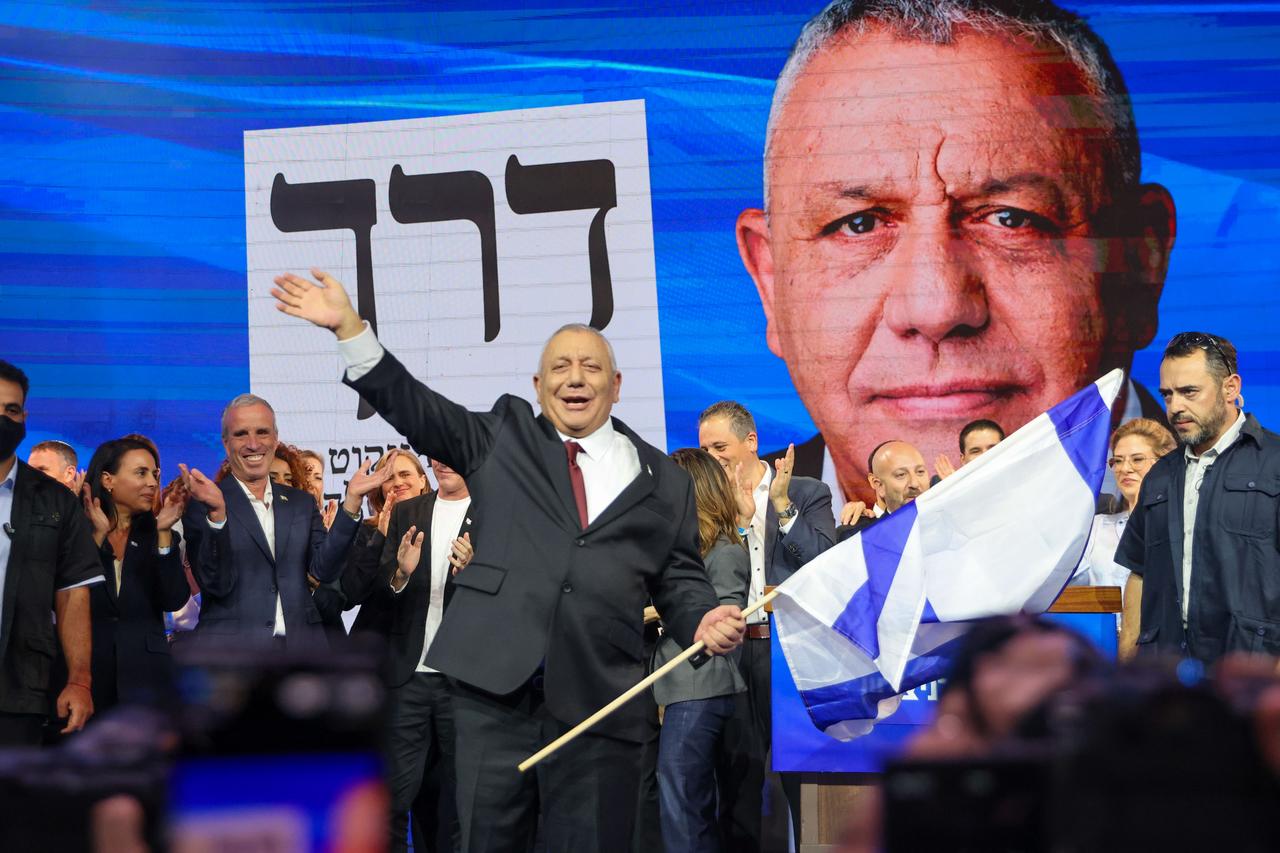
Israel’s political landscape is undergoing a significant shift as Gadi Eisenkot, leader of the Yashar Party and former Israeli Army Chief of General Staff, secures crucial backing from the country’s Arab-majority parties. This development could tip the scales in his favor, bringing his parliamentary support to a majority of 67 lawmakers, according to reports from the Turkish state-run Anadolu Agency (AA).
A Pivotal Alliance
Representatives from the United Arab List (Ra’am) and the Joint List met in Nazareth to coordinate their strategy ahead of President Isaac Herzog’s consultations. A senior Joint List official indicated that the party is leaning toward recommending Eisenkot, pending internal agreement. This move is seen as a strategic effort to replace the current Knesset Speaker, Amir Ohana, and pave the way for an alternative government to Prime Minister Benjamin Netanyahu’s administration.
Ra’am described the coordination as a significant step toward unseating Netanyahu, aligning with the broader change bloc. Meanwhile, Netanyahu’s Likud party, with 53 seats, faces mounting pressure as Eisenkot’s bloc gains momentum.
Challenges and Reactions
Despite the progress, Eisenkot’s path to forming a government is fraught with challenges. Yisrael Beytenu leader Avigdor Liberman, while pledging his support, criticized Eisenkot for the opposition’s underwhelming 48 seats. ‘We suffered a crushing defeat, and no one should spin a different story,’ Liberman remarked, placing blame squarely on Eisenkot’s leadership.
The ultra-Orthodox Shas party remains steadfast in its support for Netanyahu, recommending him to form the next government. This division underscores the deep partisan tensions in Israeli politics, with one observer noting, ‘The bottom line is that these various parties REALLY fucking hate each other.’
The Role of Arab Parties
The Arab parties, holding 19 seats, have become a pivotal force in this political drama. However, their involvement is not without controversy. Some commentators argue that collaboration with Arab parties could alienate right-wing coalition partners, potentially weakening Eisenkot’s position. ‘The Arab parties are kind of a toxic asset to any ruling coalition,’ one analysis suggested.
Others speculate that Netanyahu himself might seek alliances with Arab parties if it secured his position. ‘The irony is, if Bibi could form a coalition with just Raam and his normal partners, he 100% would,’ a commenter noted.
What’s Next?
President Herzog will begin consultations after receiving official election results on Wednesday. The designated lawmaker will then have 28 days, extendable by 14, to form a government. If neither Eisenkot nor Netanyahu succeeds, Israel could face another round of elections, prolonging political uncertainty.
As the nation watches, the stakes are high. ‘Getting rid of these three fuckers should be the one and only priority,’ one commenter urged, referring to Netanyahu and his allies. Whether Eisenkot can navigate these complexities and forge a stable coalition remains to be seen, but his growing support marks a significant moment in Israel’s political evolution.

